

Marketing for electricians: a marketing strategy for electricians, the channels compared and what it costs
Marketing strategy for electricians
In short
Good marketing for electricians starts with one decision: which work you want more of. Domestic jobs, landlord EICRs and commercial contracts are won in different places. Pick the work, then back the two or three channels that suit it, such as your Google profile, SEO, Google Ads or Local Services Ads, and stop paying for the rest.
Marketing for an electrician works best when the deciding comes before the spending. Domestic customers, landlords and commercial clients find and choose electricians in different ways, so a plan that chases all three at once spreads thin. Settle which work you want, then match the channels to it: your Google Business Profile and reviews for domestic jobs, follow-up systems for landlord EICR renewals, relationships and case studies for commercial. Google Ads and Local Services Ads bring work quickly when the basics are in place. SEO is slower and cheaper per job once it ranks. Directories and social media have a place, with limits. Put your NICEIC or NAPIT registration where nobody can miss it, and judge every pound on the jobs it books.
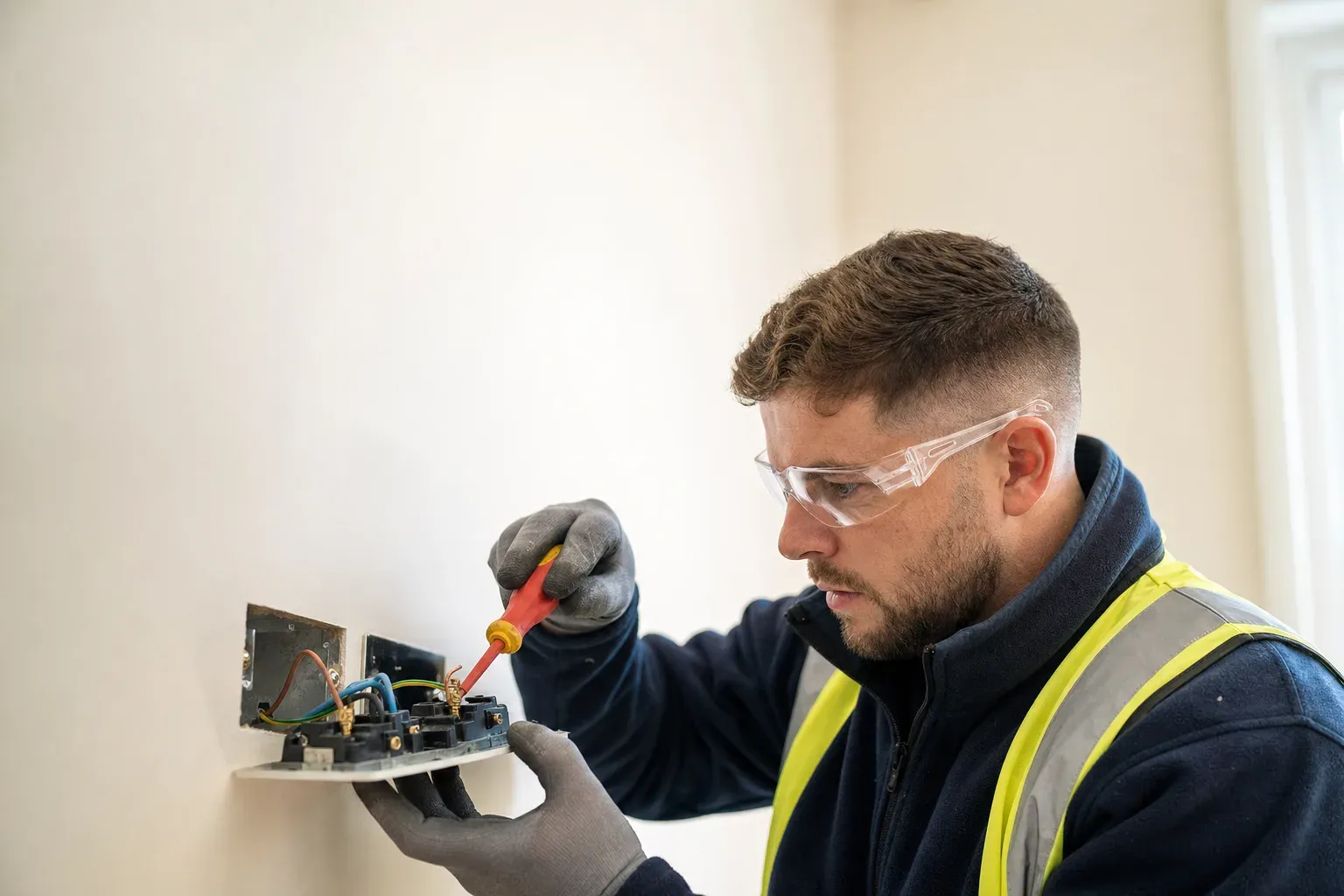
Which marketing ideas suit domestic, landlord and commercial electrical work?
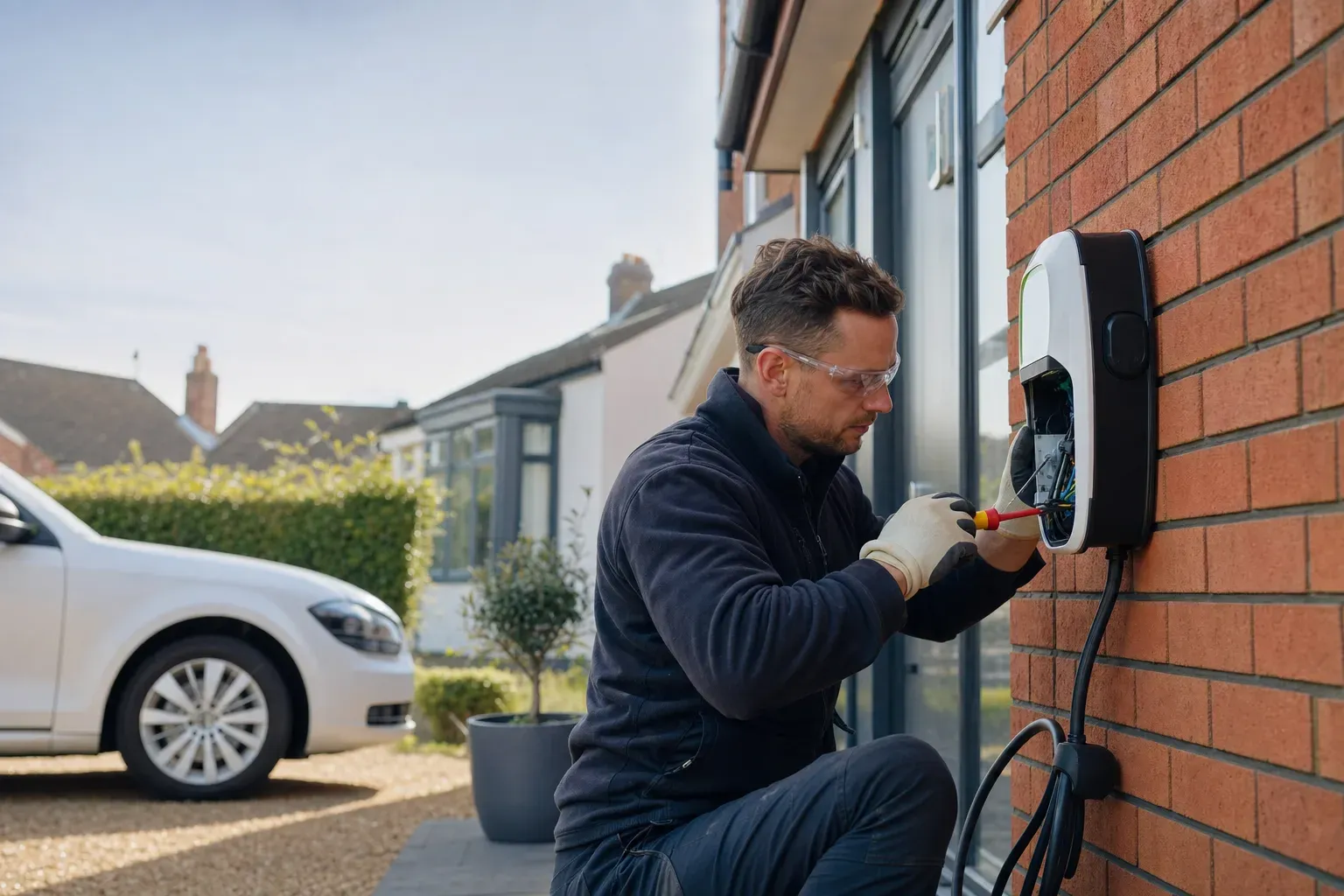
Electrical work isn't one market, and the ideas that win a fuse board swap do very little for a letting agent or a main contractor. Here's how the three main kinds of work differ, and what tends to win each.
Domestic work
Homeowners pick an electrician quickly and mostly on Google. Rewires, consumer units, extra sockets, EV chargers and fault-finding are won by the firm with a complete Google Business Profile, recent reviews that describe real jobs, and photos of tidy finished boards. Give EV charger installs a page of their own, because those buyers research before they ring.
Landlord and letting agent work
This is the nearest thing the trade has to recurring revenue. In England, landlords must have the electrical installation in a rented property inspected and tested at least every 5 years, and since November 2025 the rules have been extending to social housing too, with older social tenancies covered from 1 May 2026 (GOV.UK). Every property becomes a job that comes back on a known date. The marketing idea here isn't advertising. It's a renewal reminder that goes out before anyone else's, and a reputation with letting agents for certificates that are always right.
Commercial work
First and second fix, fit-outs and maintenance contracts run on relationships and follow the building pipeline. Case studies, accreditations and a website a contractor can check matter more than ads.
Pick the one you want more of. Our full guide to marketing for electricians covers the wider picture for the trade.
How should you advertise an electrical business, channel by channel?
Here are the main channels, roughly in the order I'd expect them to cost you less per booked job once they're working. That order is our judgement from working with trades, not a measured table, and your costs will depend on your area and your competitors.
- Google Business Profile and reviews. Free to run, and for domestic work it's usually where the call starts. Ask every happy customer for a review that mentions the job and the town.
- SEO. Slow to build, then the cheapest steady source of jobs, because you don't pay per click. Our guide to SEO for electricians covers domestic, commercial and EV searches.
- Google Local Services Ads. Google's pay-per-lead ads that sit above the normal results. Google says you pay for customers, not clicks, and qualifying firms can show a badge such as Google Guaranteed or Google Screened. The leads come from people with an urgent need.
- Google Ads. Fast, controllable and easy to waste money on. Ads need a strong advert, a landing page with reviews, accreditations and real photos of your work, and a clear way to call or book. If your reviews are thin and your website is weak, wait. Our guide to Google Ads for electricians goes into budgets, and our paid ads service is there if you want it run for you.
- Checkatrade, MyBuilder and similar directories. Useful while your own presence is thin. You pay the platform either way, and you're often compared side by side with other electricians on the same page.
- Social media. Cheap to reach people, and good for showing your work and your team. A low-price offer will bring enquiries, but it pulls in bargain hunters too, so use it to show quality rather than to compete on price.
When is a marketing strategy the wrong thing to pay for?
When you'd be buying a document instead of a decision. Some strategy work arrives as a thick deck of positioning theory and buyer personas that reads impressively and changes nothing on the ground. For an electrician, that's the wrong purchase. The only strategy worth its fee is one that changes what you do next week: a directory you stop paying for, a service page you finally build, a landlord list you start following up. If a plan moves no decision, it earned no money. I'd rather hand a working electrician one honest page he acts on than a bound report he compliments once and shelves.
It's also too early for a firm that hasn't got the basics running. A newly registered sparky with a van and a mobile doesn't need a positioning exercise. He needs one channel bringing enquiries, his Google profile filled in properly, and a way to stop calls slipping while he's halfway up a ladder. Over-planning at that stage is just putting off the work.
Strategy earns its keep when the paths ahead conflict. A two-van firm deciding whether to specialise in landlord EICRs or push into EV chargers has a real fork, because those directions need different approvals, different channels and different messages, and choosing badly costs a year. The test never changes: does this thinking change what the business does on Monday? If it doesn't, do the practical thing and come back to strategy when there's a genuine choice to make.
What do customers check before they call an electrician, and how do NICEIC, NAPIT and reviews fit in?
Electrical work can hurt someone if it's done badly, so customers look for reasons to trust you before they look at price. A good plan makes those reasons impossible to miss.
Registration, shown properly
Certsure, trading as NICEIC, and NAPIT are both government-authorised competent person schemes for electrical work, and registered firms are listed on the electrical competent person register so householders can check them (GOV.UK). Put your scheme logo and registration number on your website, your Google profile, your quotes and the van, and link to where people can check it. "Registered" isn't decoration for an electrician. It's what the customer is buying.
Reviews that describe the job
"Replaced our old fuse box in a day, explained the certificate and left the place spotless" sells the next consumer unit far better than five stars and "great job". Reply to every review, good or bad.
Proof on your own site
Real photos of your boards and installs, the areas you cover, and a separate page for each kind of work you want more of. Your website should do the convincing for the customers your other channels send, and a follow-up system should catch every EICR renewal before a rival does.
Above all, the plan should say clearly which channels you're backing and which you're leaving alone.
Videtta Heating: from £223k to £1.3m revenue in six years
We haven't published a case study for electricians yet, and we won't show you a result we don't have. The closest we've published is Videtta Heating, a heating and plumbing firm we've worked with since February 2020.
- 486%Revenue growthIn six years
- £223kRevenue in 2020Running it single-handed
- £1.3mRevenue six years onMultiple vans and a team
Steve and his team at We Are SMC have been working with Videtta Heating & Plumbing since February 2020 helping with our overall strategy and marketing. In that time their skills and expertise in marketing have seen us massively increase our leads, and as a result has increased our revenue, enabling us to take on more engineers. Steve and the team have also helped us integrate a new CRM system and job management tool in the business to handle leads and has also overseen the adoption of our finance offering for customers. I would not hesitate in recommending Steve and his team at We Are SMC to any business looking to grow online, we look forward to continuing our great working relationship together.
What mistakes do electricians make with their marketing?
Skipping the plan tops the list. A directory listing here, some boosted posts there, a leaflet drop, and money leaves the account while a bit of work trickles in, but nothing tells you which spend paid and which was a donation.
Next comes trying to be everything. Lump landlord compliance, rewires, EV chargers and commercial work onto one page and each converts poorly, because those customers search differently and buy differently. The EV customer especially expects a proper page they can research.
Then there's switching on Google Ads too early. Ads send people to look you up, and if they find a handful of reviews, no photos of your work and a tired website, you've paid for a click that goes to the next firm. Get the basics right first.
Copying the big operator down the road is another. A plan built for a ten-van firm with staff on the phones can sink a two-van outfit running lean.
And the costliest for anyone with rented-sector work is having no follow-up at all. Let one EICR renewal reminder slip and a competitor can walk off with a landlord's whole portfolio.
What does marketing for electricians cost, using our published prices?
These are the prices published on our pricing page, checked on 9 November 2026. Ad spend is always separate and paid straight to the platform.
| What | Published price |
|---|---|
| Booked Solid System (website, local SEO, Google Ads management, CRM, brand film) | £1,500 + VAT a month, 12-month minimum term |
| Strategy session | £2,995 + VAT half day, £4,995 + VAT full day |
| SEO on its own | From £600 + VAT a month, three-month minimum |
| Paid ads management | £500 + VAT per channel per month, setup from £500 + VAT |
| Launchpad Website | £695 + VAT |
If you're still working out a sensible budget, our guide to how much a tradesman should spend on marketing walks through it.
Whoever you buy from, look for proof that they've delivered for firms like yours. Be wary of guaranteed results, or anything that sounds too good to be true. The agencies promising the quickest wins are usually the ones that disappoint, and nobody can promise a number before they've looked at your business, your area and your competitors.
How do you get started with marketing for an electrical business?
Start with the fork everything else runs off: which work do you actually want more of? Domestic jobs, landlord EICRs, EV chargers or commercial contracts. Be straight with yourself about which is the most profitable and which you enjoy, because that answer decides your channels, your message and the approvals and systems you'll need behind it.
Then do the free things before the paid ones. Fill in your Google Business Profile properly, put your NICEIC or NAPIT number where people can see it, ask your last twenty customers for a review and build a page for the work you want more of. After that, choose one paid channel and give it long enough to judge.
You don't need to turn this into a grand production. If you'd like help shaping the plan properly, our marketing strategy service gives you clarity on what to do, how to position the firm, what to say and why customers should choose you, plus which channels deserve your money and which don't. Or start with our free Website & AI Readiness Audit, which checks your website and Google presence and gives you a 90-day plan.
Want the whole system built and run for you? See our marketing for trades programme, the Booked Solid System.
Frequently asked questions
What is the best marketing for electricians?
There isn't one best channel for every firm. For most domestic electricians, a complete Google Business Profile with plenty of recent reviews brings the cheapest work, followed by SEO once it ranks. Google Ads and Local Services Ads bring jobs quickly when the basics are in place. Landlord and commercial work is won more through follow-up and relationships than advertising.
What is the best way to advertise an electrical business?
Match the advertising to the work you want. For urgent domestic jobs, Google Local Services Ads and Google Ads put you in front of people ready to book, but only once your reviews, photos and website will convince them. For landlord work, reminders and letting agent relationships beat ads. Directories help while you build your own presence, and social media is better for showing quality than winning on price.
How can an electrician get more work?
Decide which work you want more of, then make it easy to find and easy to trust. Ask every customer for a review, show your NICEIC or NAPIT registration everywhere, build a page for each service you want to grow, and answer the phone or text back fast. If you do landlord work, set reminders for every EICR renewal so the work comes back to you rather than a competitor.
Are Google Local Services Ads worth it for electricians?
They can be. Google charges per lead rather than per click, and qualifying firms can show a badge such as Google Guaranteed or Google Screened, which helps with trust. The leads tend to be people who need someone soon. They work best alongside strong reviews, because customers still compare you with the other firms shown. Track the jobs you win, not just the leads.
Do I need NICEIC or NAPIT registration to market my electrical business?
Registration with a competent person scheme such as NICEIC or NAPIT is what lets you self-certify notifiable work, and registered firms appear on the electrical competent person register that householders can search. Customers look for it, so if you're registered, show the logo and number on your website, Google profile, quotes and van. If you're not, be clear about how your work is certified.
Find out where your website is losing you work.
A free review of your website, Google presence and AI visibility, with a 90-day plan.